


A neutral guide for vehicle owners
The Armotech 4.0 adds useful positioning options. Your legal obligations still depend on where you are, how the firearm is carried or transported, and whether the vehicle is occupied.
Start the six-question check ↓The 4.0 is designed to cover the trigger area while mounted, provide magnetic retention rated up to 15 pounds, and allow full 360° positioning. Those are product features. They do not determine whether a particular location, carry condition or storage method is lawful.
The 4.0 positions and retains a compatible firearm. It is not locked storage, does not prevent unauthorized access and should never be presented as a substitute for storage required by law.
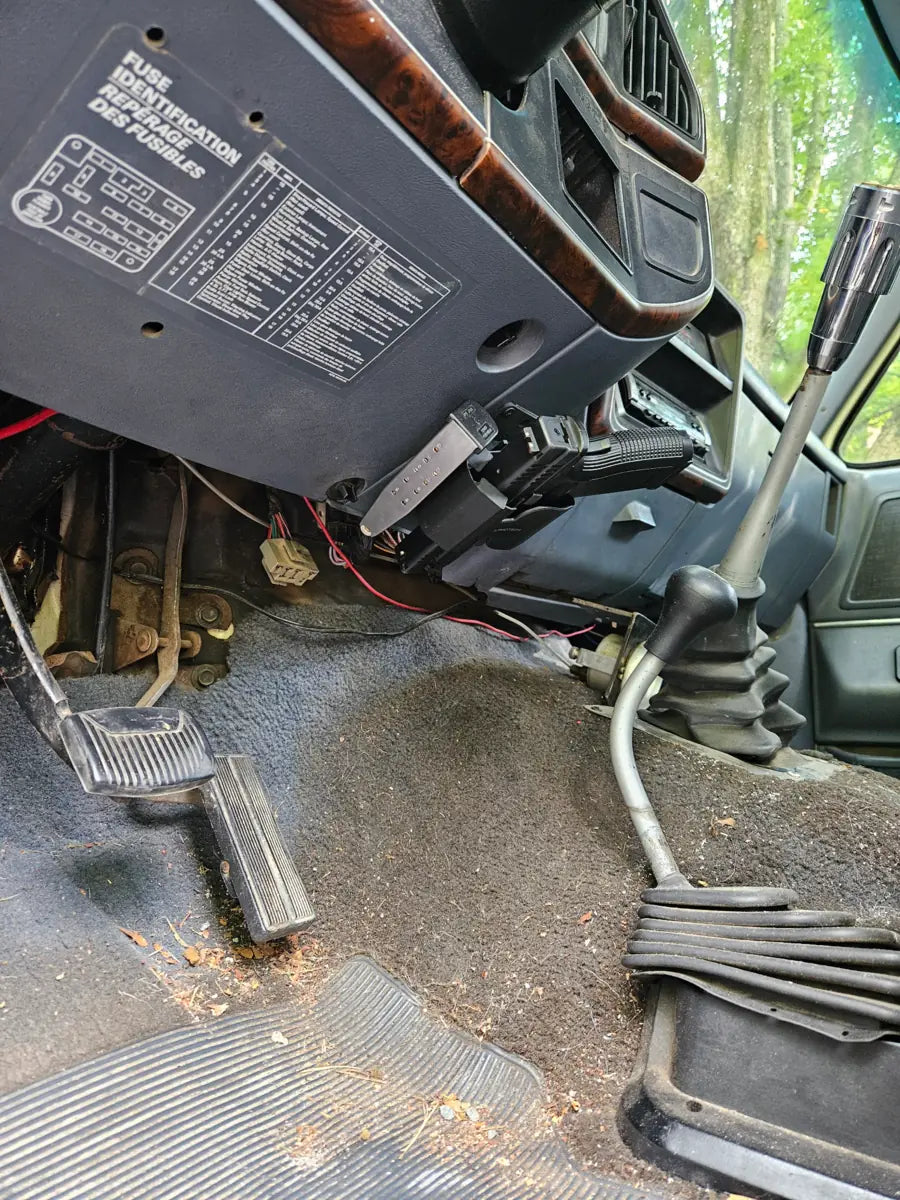
Start with the people and places involved: the owner, driver, passengers, starting point and destination. Eligibility and permit rules can change across jurisdictions.
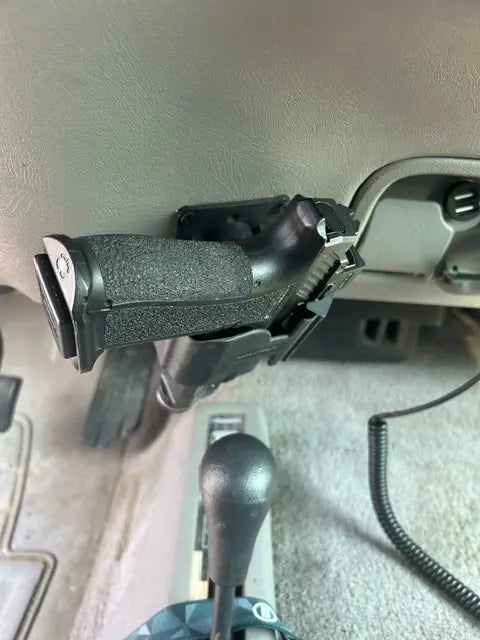
A setup that is visible from one angle may still be treated differently under a state’s vehicle-carry or concealed-carry rules. Do not assume that “inside the vehicle” is treated as one category everywhere.
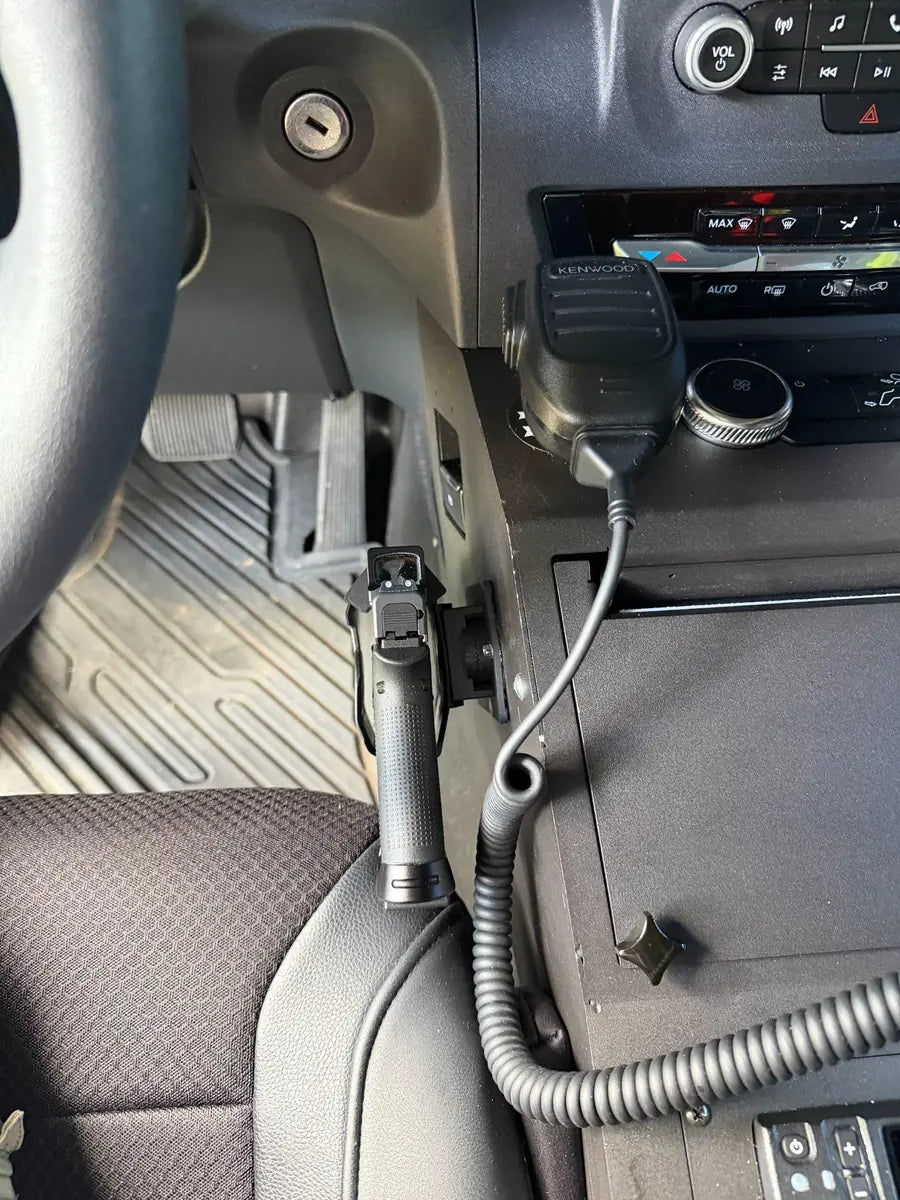
Some transport rules turn on whether the firearm is loaded, accessible from the passenger compartment, locked, cased, or separated from ammunition. An open magnetic mount does not satisfy a requirement for a locked container.
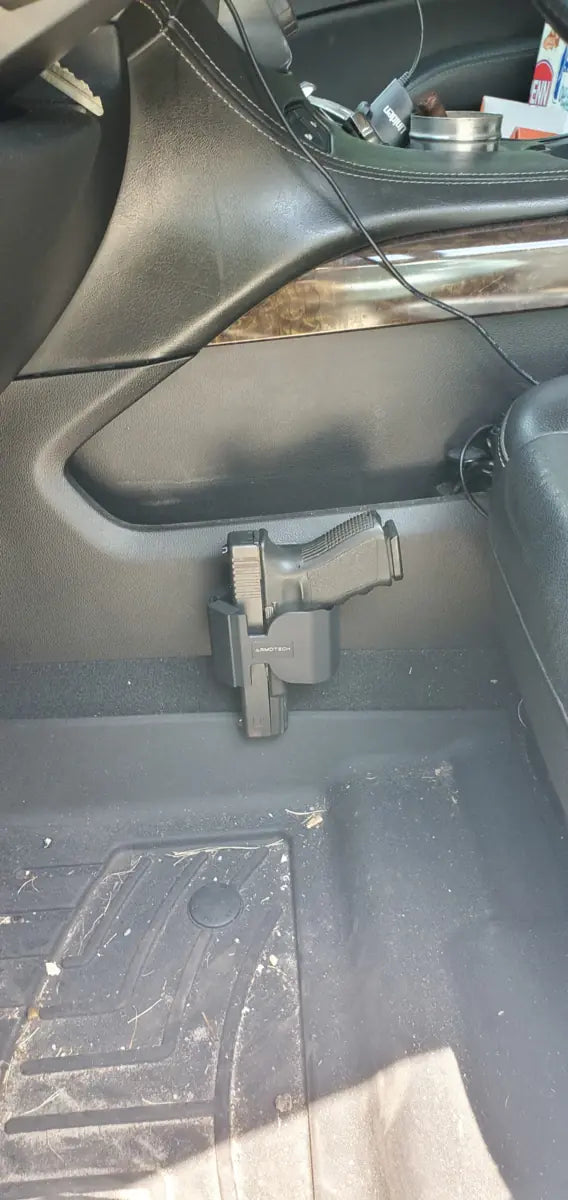
Schools, government facilities, posted private property and other sensitive places may have separate restrictions. Parking-lot rules can also differ from rules inside the building.

ATF guidance advises avoiding unattended vehicle storage when possible. If a firearm must remain in a vehicle, ATF recommends checking that it is unloaded and placing it out of sight in a secure device attached to the vehicle.

18 U.S.C. § 926A describes federal protection for certain interstate transportation when possession is lawful at origin and destination, the firearm is unloaded, and neither firearm nor ammunition is readily accessible. For vehicles without a separate compartment, it specifies a locked container other than the glove compartment or console.
Primary-source starting points
These sources are a starting point, not a complete review of your state or local law. Current official state resources or qualified legal counsel should resolve questions about a specific setup.


